WorkAboutProcessOpen my CVContact

Case study · 05

VIN Fitness

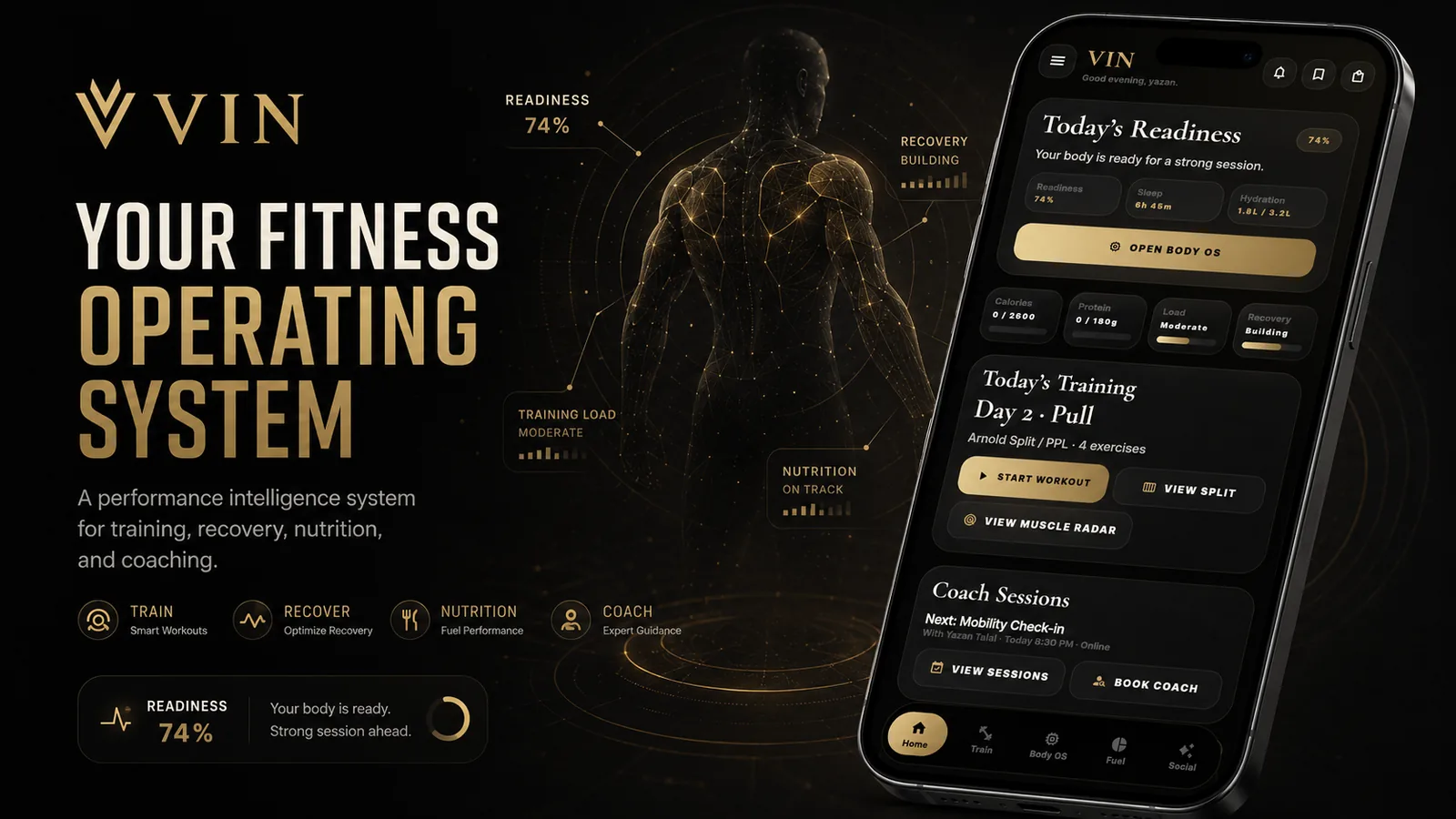
One connected experience linking training, body signals, nutrition, community, and fitness services into a complete daily cycle.

Role
Product Designer & Flutter Frontend Developer
Year
2025
Platform
Multi-role mobile app (Flutter)
Status
In development

The problem

Managing a complete fitness journey often requires several disconnected tools that do not share the same context.

Read the full context

A complete fitness journey involves much more than viewing a workout schedule or recording sets and repetitions. Athletes need to build programs, discover exercises, understand daily readiness, track sleep and hydration, manage nutrition, evaluate muscle development, save useful knowledge, and remain connected to a fitness community. When these functions are divided between separate workout, nutrition, social, commerce, and coaching products, users lose the context linking daily actions to performance. Training becomes disconnected from recovery, nutrition becomes detached from readiness, and progress metrics do not naturally lead to the next decision. Athletes also need a clearer way to discover training programs and compare coaches by specialty, location, rating, availability, and price. Coaches face a parallel challenge, requiring dedicated tools for clients, schedules, plans, feedback, reports, services, and communication rather than relying on fragmented conversations and manual records.

The idea

VIN Fitness is structured as a connected performance ecosystem where daily readiness, training, recovery, nutrition, coaching, community, learning, and commerce use one product language and shared local state.

  • Product Strategy
  • Multi-Role UX
  • Flutter
  • Riverpod
  • GoRouter
  • Local Persistence
  • Data Visualization
  • Frontend Testing
  1. 01

    Readiness & Body OS

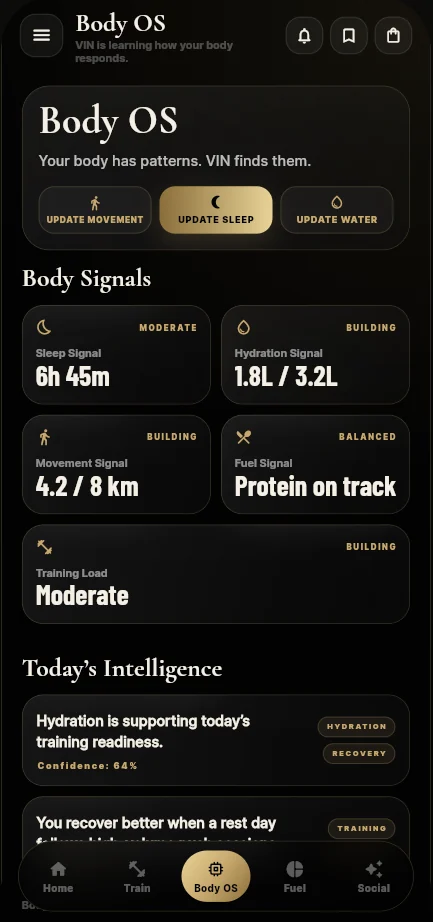
    Sleep, hydration, movement, fuel, recovery, and training load feed a daily readiness view and adaptive guidance instead of remaining isolated trackers.

  2. 02

    Training & Muscle Intelligence

    Custom splits, a large exercise library, active workout execution, progress, Muscle Radar, and VIN Marks connect planning to visible performance consequences.

  3. 03

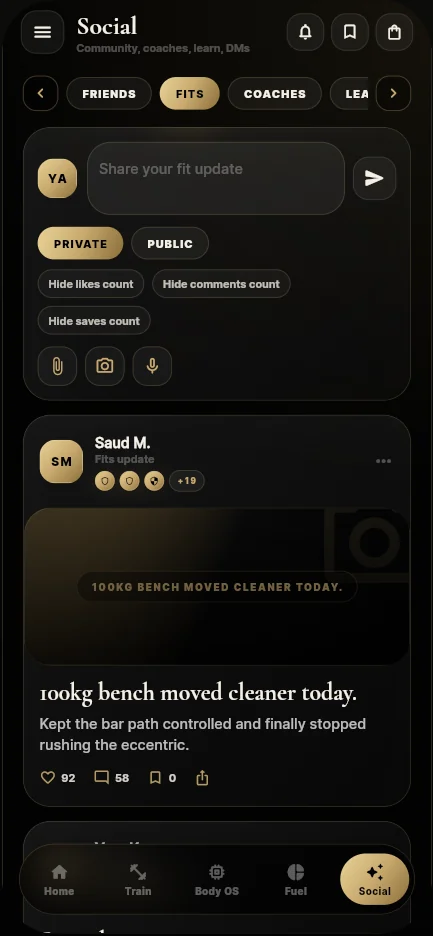
    Coaching & Community

    Athlete and Coach OS journeys connect discovery, booking, sessions, plans, reports, form checks, messages, and athlete-controlled permissions.

  4. 04

    Fuel, Learn & Commerce

    Nutrition tracking, meal discovery, timeline, podcasts, books, news, Ask VIN, saved content, and a complete frontend store extend the product beyond workouts.

Design decisions

Three core decisions organized a broad set of capabilities into one connected product journey.

01

Structuring the ecosystem around five daily hubs while keeping specialist tools accessible

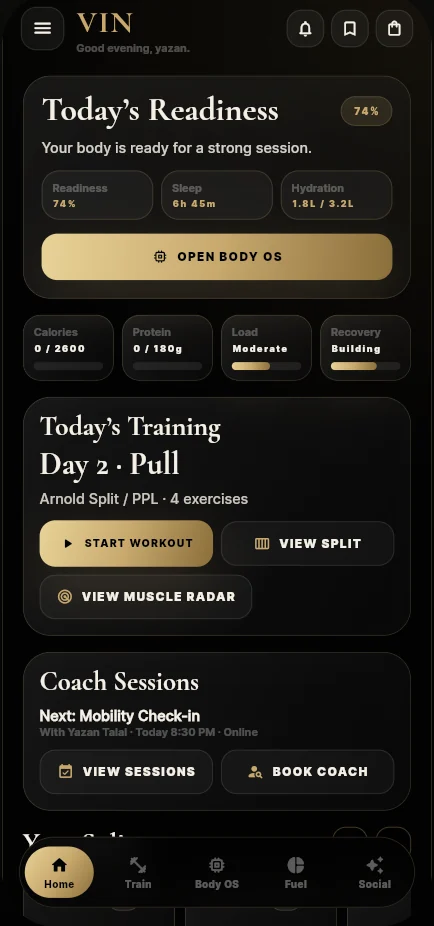
Why?Readiness, today’s workout and coach sessions share one home, with the five daily hubs one tap away.

Primary navigation centers on Home, Train, Body OS, Fuel, and Social because they represent the user’s most frequent daily decisions. Specialist experiences such as Ask VIN, Timeline, Progress, VIN Badges, Store, and Settings are grouped inside a unified drawer. This structure supports a large number of screens without overloading the main navigation and keeps contextual routes between related sections close at hand.

02

Building a closed performance loop rather than a collection of isolated trackers

Why?Sleep, water, movement and load feed one readiness read instead of separate trackers.

Sleep, hydration, movement, nutrition, and training load feed into Body OS readiness and Adaptive Split suggestions. Users then complete a workout, and the session affects Muscle Radar, progress, Timeline, and VIN Badges. Each input therefore creates a visible consequence or next action elsewhere in the product instead of remaining an isolated metric.

03

Expanding the product from a personal tracker into a discovery, community, and services ecosystem

Why?Community, learning and coaching follow the same discover, save and act pattern as training.

Train Like, Social, Learn, Coach Map, coaching sessions, Coach OS, Store, and Ask VIN follow consistent patterns of discovery, detail, saving, interaction, and action. Users can discover and import a program, find and book a coach, save educational content, or purchase gear without leaving the product’s visual and interaction language. Athlete-controlled permissions and approval flows protect control where coaching data and program changes are involved.

On mobile

From Daily Readiness to Training, Fuel, and Community

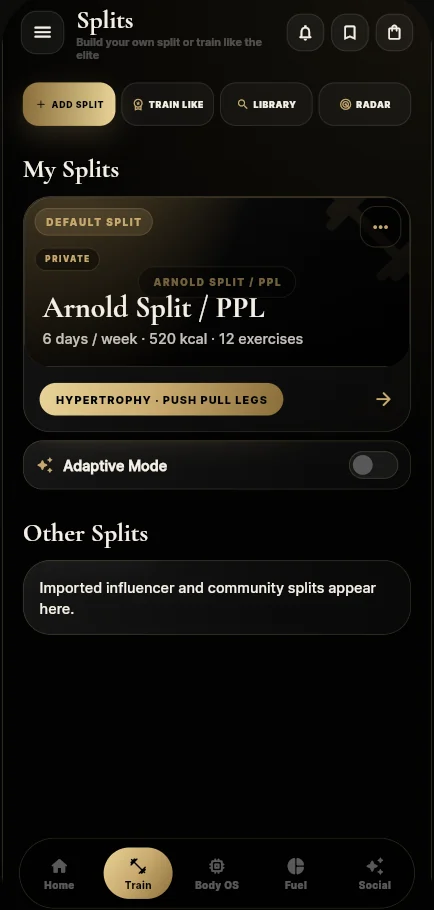
  • My Splits
    My SplitsCustom, imported, and adaptive programs remain visible from one training hub.
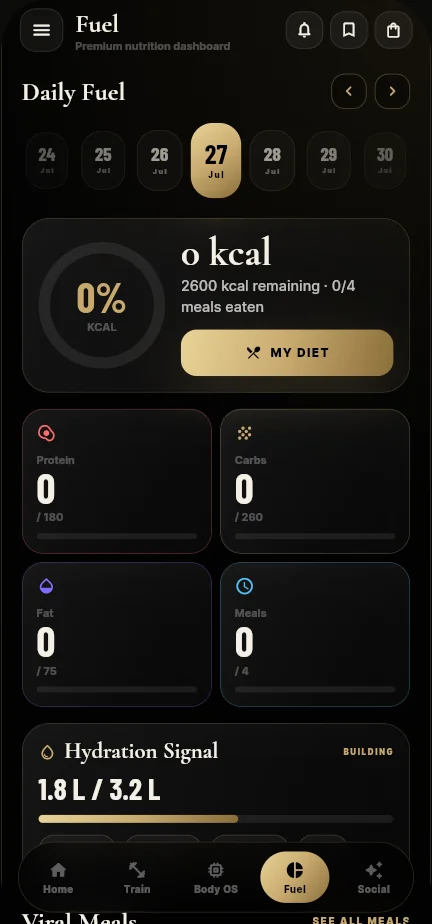
  • Fuel
    FuelCalories, macros, hydration, meals, and daily nutrition actions share one view.
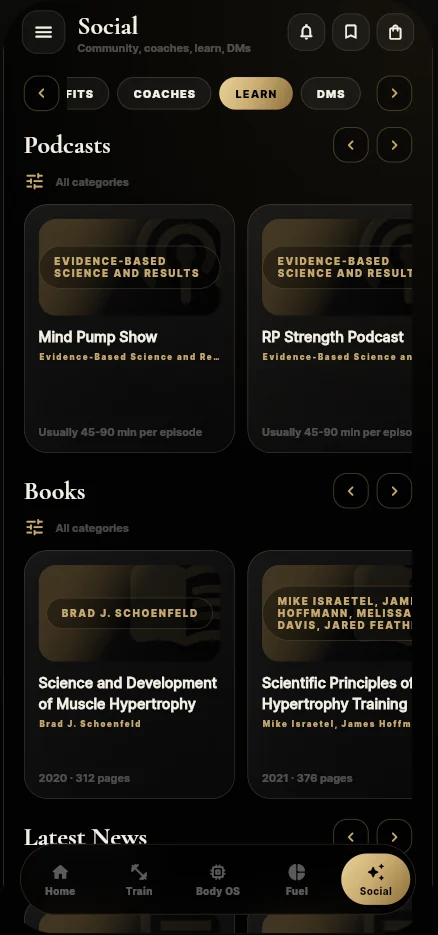
  • Learn
    LearnPodcasts, books, and news are organized as an actionable fitness knowledge library.

How it's built

From the screen to the database.

  1. Flutter UIAthlete and coach product journeys
  2. Riverpod ProvidersShared and derived feature state
  3. Feature ModulesTraining, Body OS, coaching, social, learning, and store
  4. Local Data + SharedPreferencesInteractive local state and persistence

IntegrationsGoRouterSession-Only Access GateFlutter Test

Engineering evidence

  • Shared Riverpod state synchronizes athlete and coach plans, sessions, messages, reports, and permissions by common identifiers.
  • SharedPreferences persists profile, programs, body signals, favorites, cart state, and other frontend activity.
  • Athlete-controlled data and action permissions block coach operations when access is revoked.
  • The access gate is session-scoped and validated against an exact configurable code and fingerprint.

Validation

  • Flutter analysis and targeted tests cover the access gate, local session behavior, and coach–athlete integration.
  • Tests verify synchronized plans, messages, sessions, privacy-aware reports, form checks, and permission revocation.
  • The deployed private version exercises the complete multi-role journey with persisted local state.

Outcome

A complete Flutter experience that turns fragmented fitness activities into one connected digital ecosystem.

Read the full context

VIN Fitness delivers a journey that begins with user identity and goals, then moves through readiness, program creation or import, exercise discovery, active workout execution, muscle analysis, nutrition management, daily records, progress, and badge development. The journey extends beyond tracking. Users can discover influencer and community programs, publish progress updates, communicate through DMs, explore books, podcasts, and news, ask questions through Ask VIN, find coaches through Coach Map, book and manage sessions, review reports and feedback, and browse VIN products through a complete frontend commerce flow. Coach OS provides a parallel professional journey beginning with application, approval, setup, and public-profile preparation, followed by client management, scheduling, booking requests, programming, templates, messaging, form checks, notes, reports, analytics, services, content, and public-profile management. The project demonstrates the design of a broad multi-system, multi-role product, an information architecture supporting more than 50 connected routes and screens, complex local state management, interactive visualizations, and a unified experience spanning training, recovery, nutrition, community, learning, commerce, and professional coaching. The app is in active development, and the current version runs on local data and persistence.